There is no single “carpet binding.” Different edges look different, wear different,
and cost different. Here’s a quick guide so you know what to ask for — and so the
calculator makes sense when you get there.
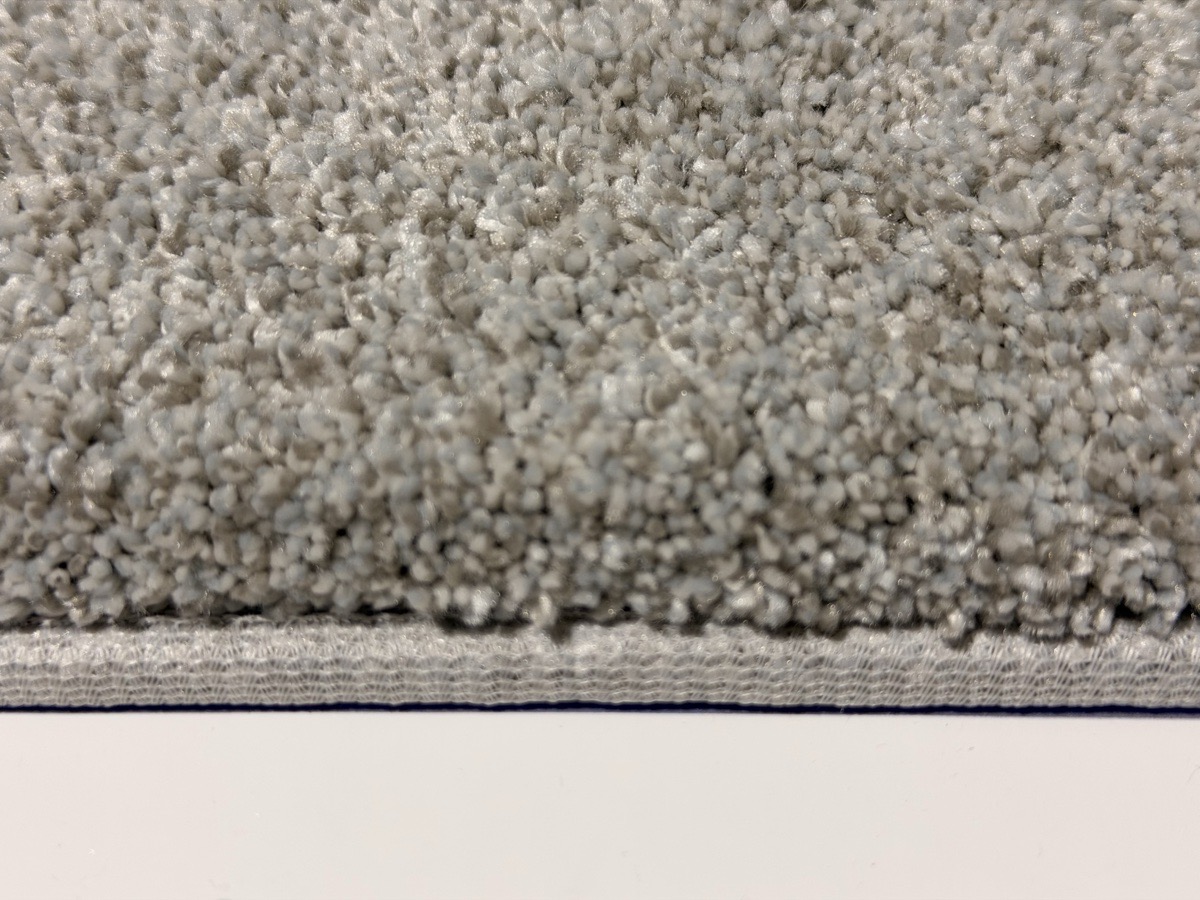
Standard Binding (7/8”)
What it is: A narrow woven-tape edge sewn around the perimeter of the carpet.
The industry standard — about 9 out of 10 bound rugs leave our shop wearing it.
Looks like: A clean, low-profile edge about the thickness of a pencil.
Disappears into the rug.
Yarn: Polyester, cotton, or wool — 30+ colors in stock.
Choose it when: You want a finished rug that does its job and stays out of the way.
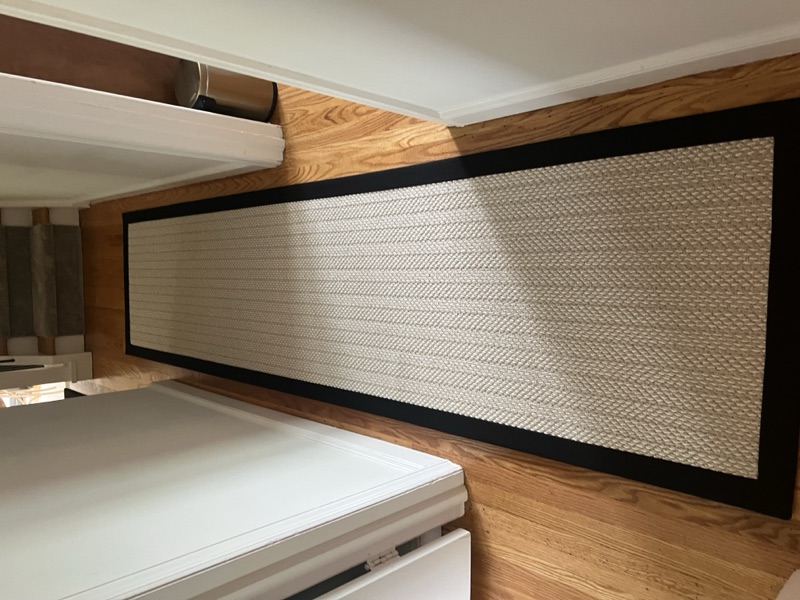
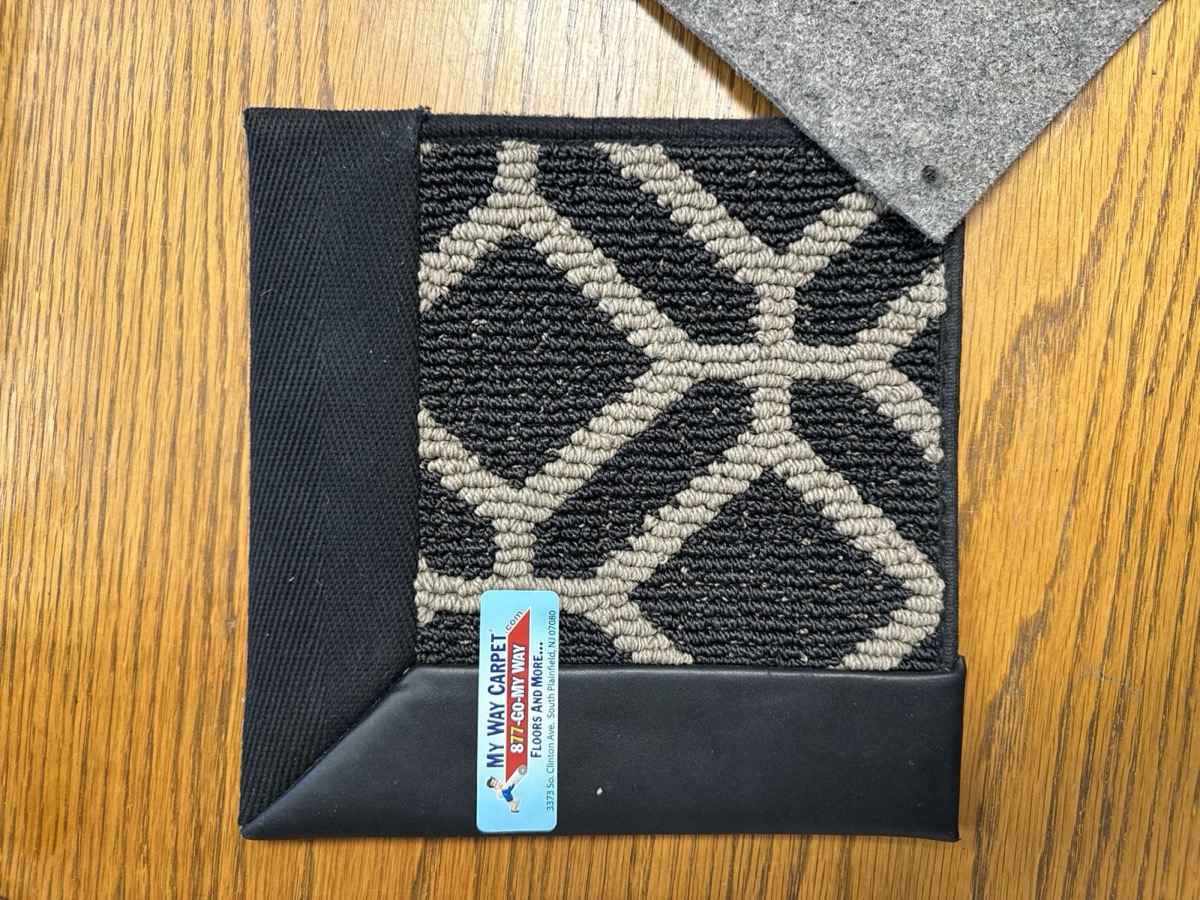
Wide Binding (3” or 5”)
What it is: Premium wide-binding tape in 3” or 5” widths — a deeper,
more upholstered rug border.
Looks like: A framed edge that reads as a decorative band around the rug.
Noticeable on purpose — it’s designed to be seen.
Choose it when: You want the rug to feel expensive. Formal rooms,
statement rugs, designer projects.
Note: Corners are hand-sewn and mitered, so they’re priced separately
in the calculator.
See all 5 wide-binding stitch options →
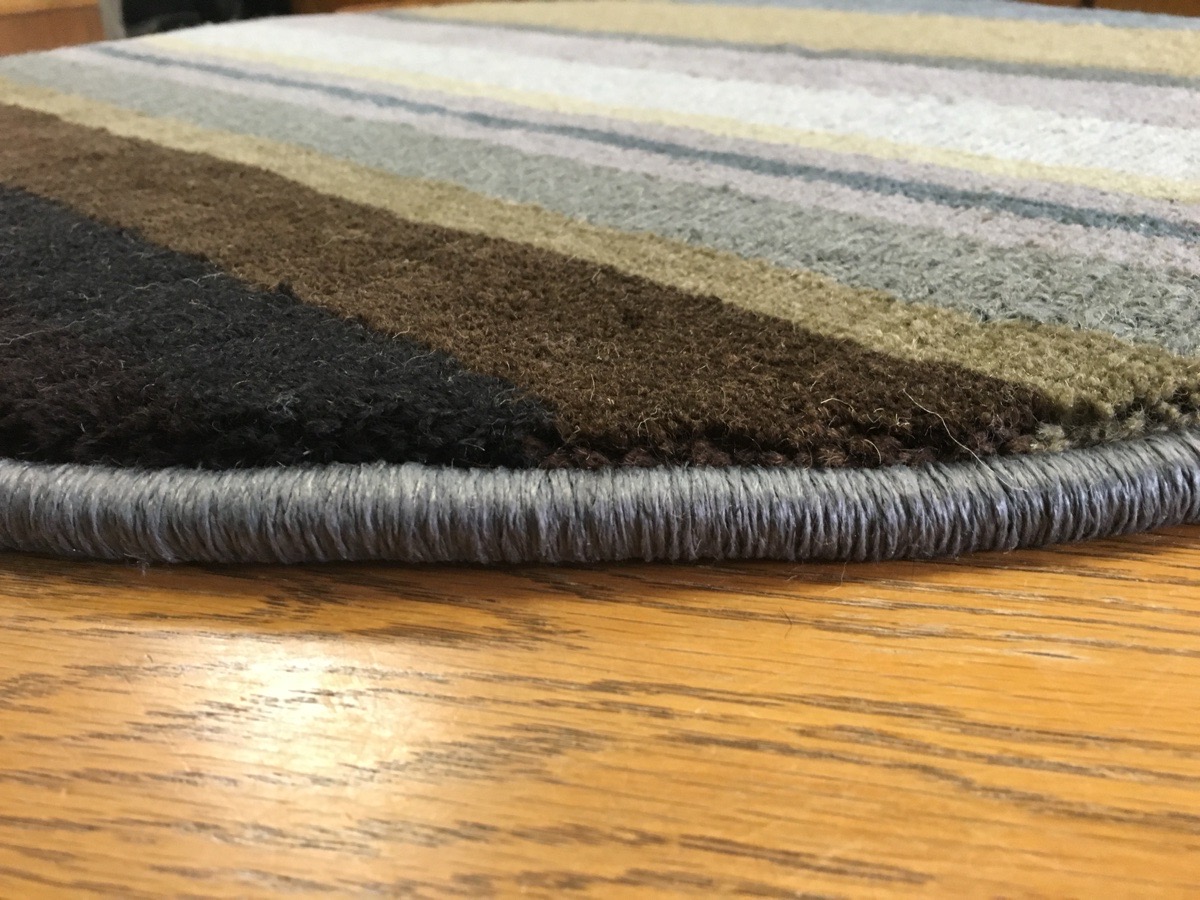
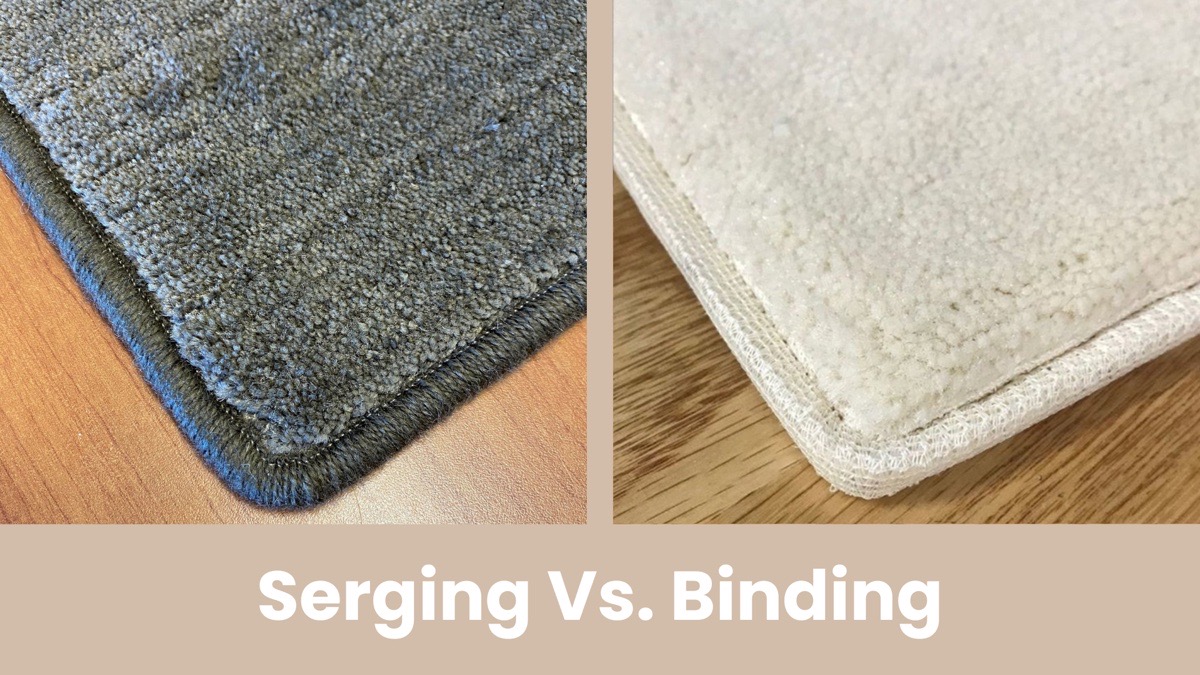
Serging
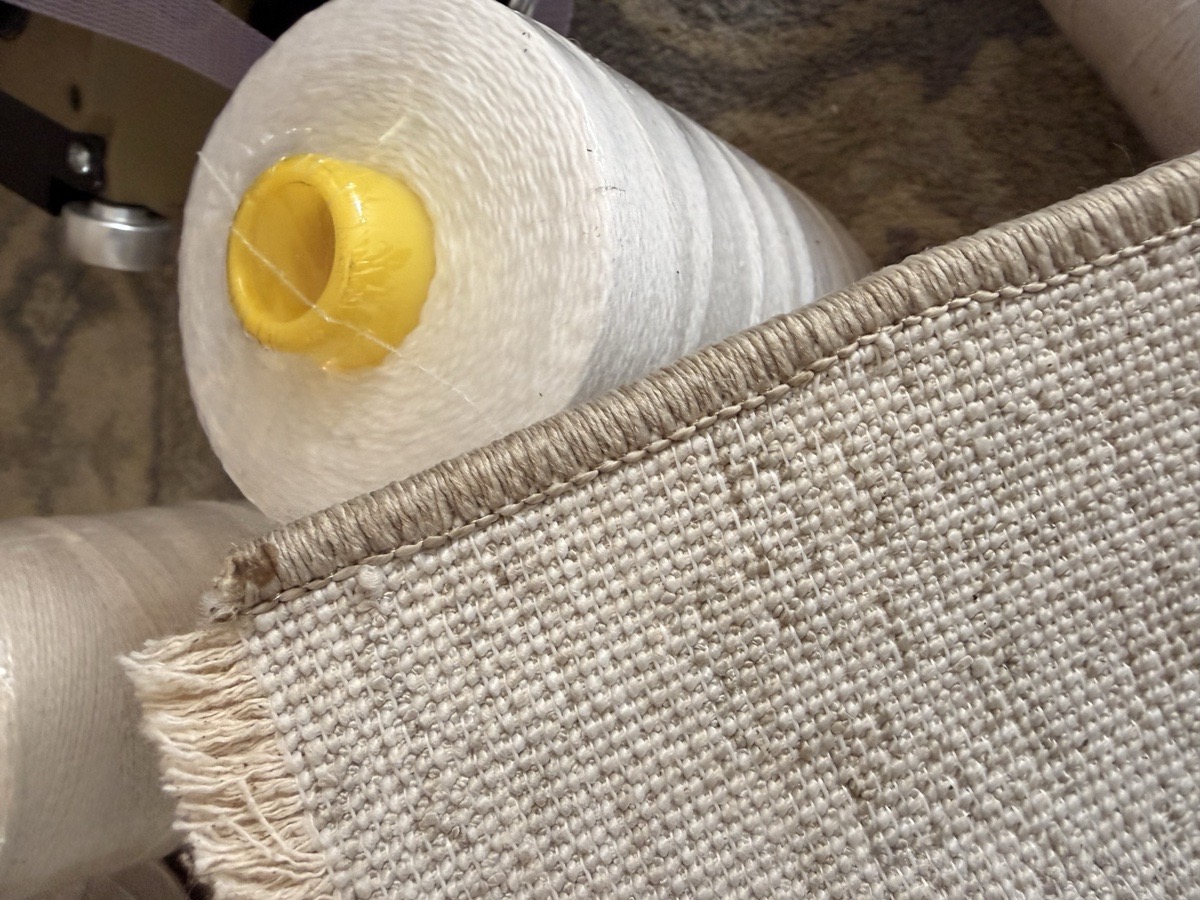
What it is: A classic wrap-over stitch that wraps yarn around the rug edge —
no tape at all. The most labor-intensive edge we do.
Looks like: A tight, continuous thread-wrapped edge — the same finish
you see on high-end oriental rugs.
Yarn: Cotton, polyester, or wool — thicker yarn, full edge coverage.
Choose it when: You want the rug to read as a true oriental or traditional
rug. Premium look, premium price per linear foot.
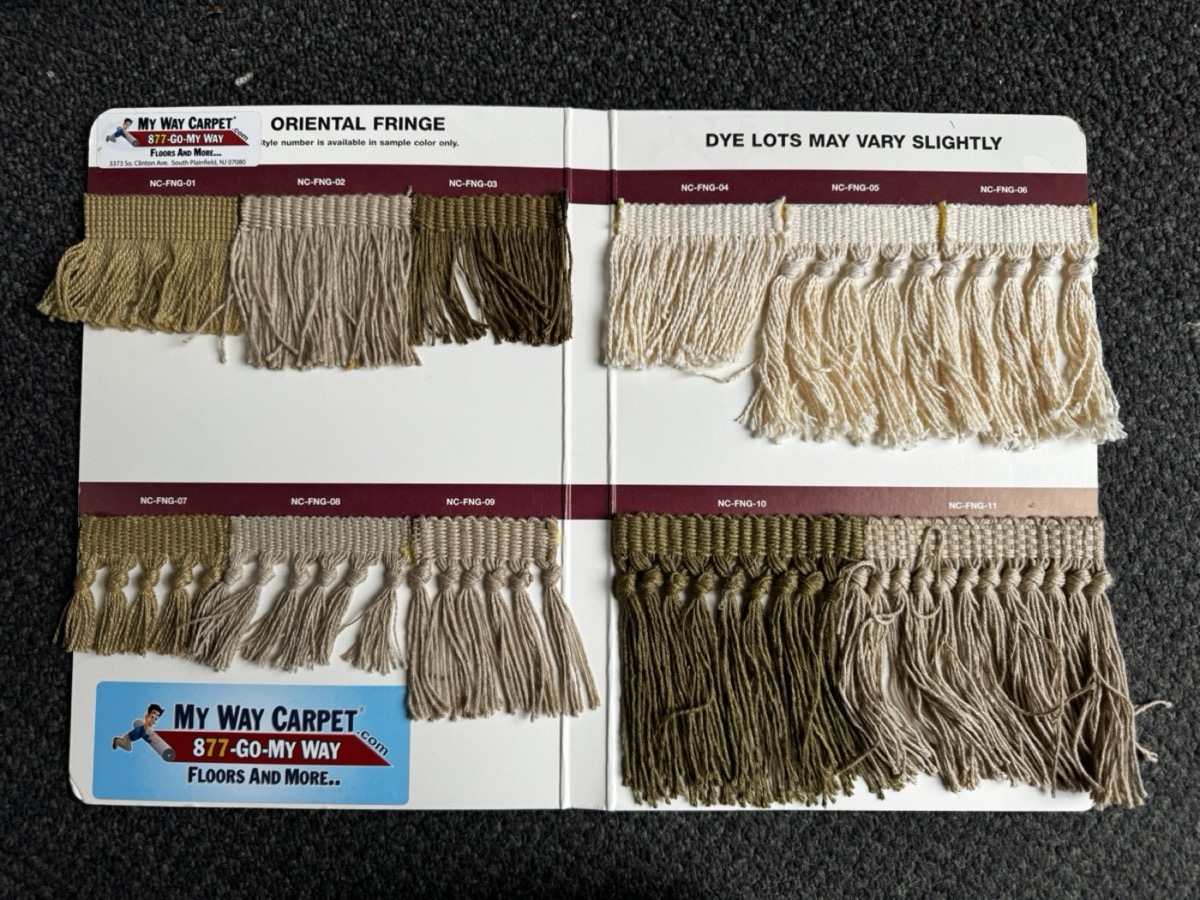
Fringing
What it is: Knotted or sewn-on fringe along the short ends of the rug —
the same detail you see on antique oriental rugs.
Looks like: A decorative tassel edge, usually on the two short ends,
often paired with serging on the long sides.
Colors: A dozen natural-fiber colors on display in our showroom —
creams, olives, browns, and everything between.
Pair with: Serging for the complete traditional finish.
🔥
Hot-Glue Backing add-on
What it is: After we sew the binding, we run a layer of hot-melt glue
along the back of it. The stitching stays — the glue just armors it.
Why it matters: As people walk on the rug, the bound edge rubs against
the floor. Dirt, grit, and dust work their way into the stitching and the friction slowly
saws through the yarn. The glue coat takes that abrasion instead of the thread.
Looks like: No visible change from the top — it’s only on the back.
Choose it when: The rug lives in a high-traffic spot, sits on a hard floor,
or has to put up with a lot of abuse. Priced on top of the binding — worth it.
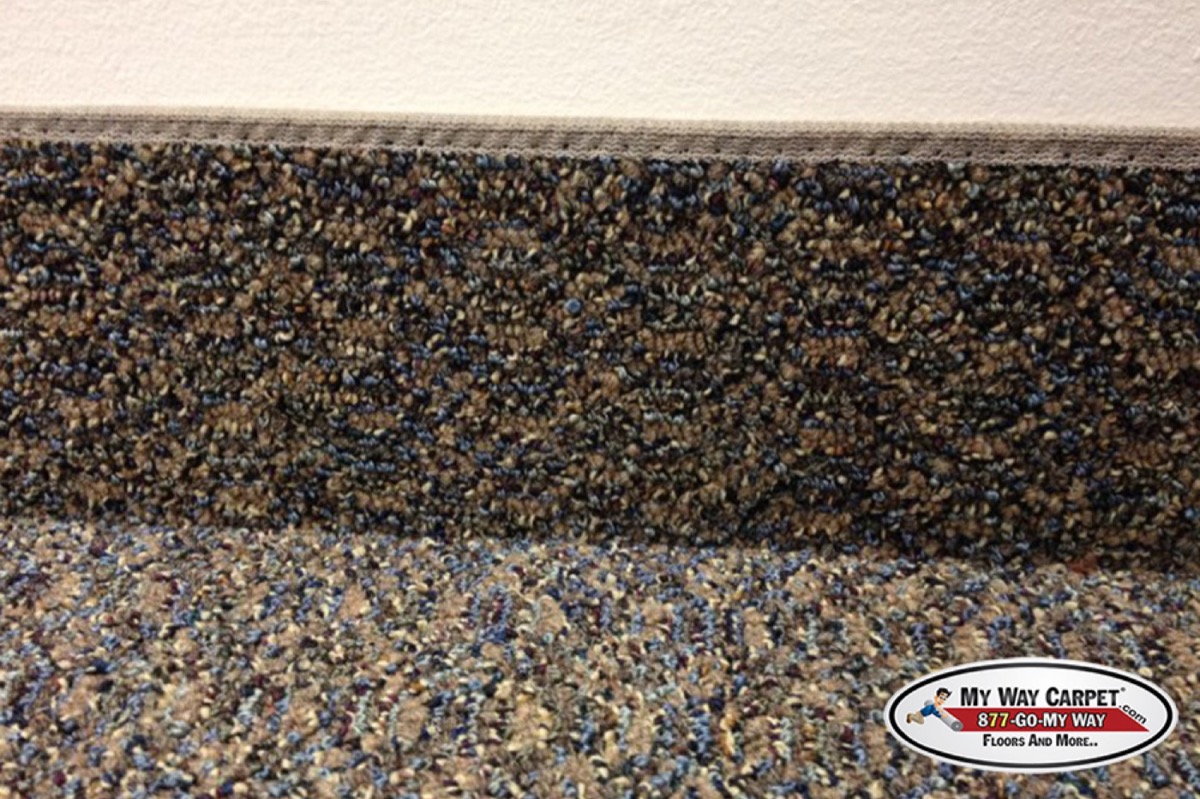
Wall Base / Edging
What it is: Commercial carpet cut and bound into strips that run along the
bottom of the wall — a custom alternative to vinyl cove base.
Looks like: A continuous run of carpet at the base of the wall, matching
the flooring. Low-profile, seamless.
Choose it when: Commercial, institutional, or high-end residential jobs
where the base should match the carpet instead of standing out as vinyl.
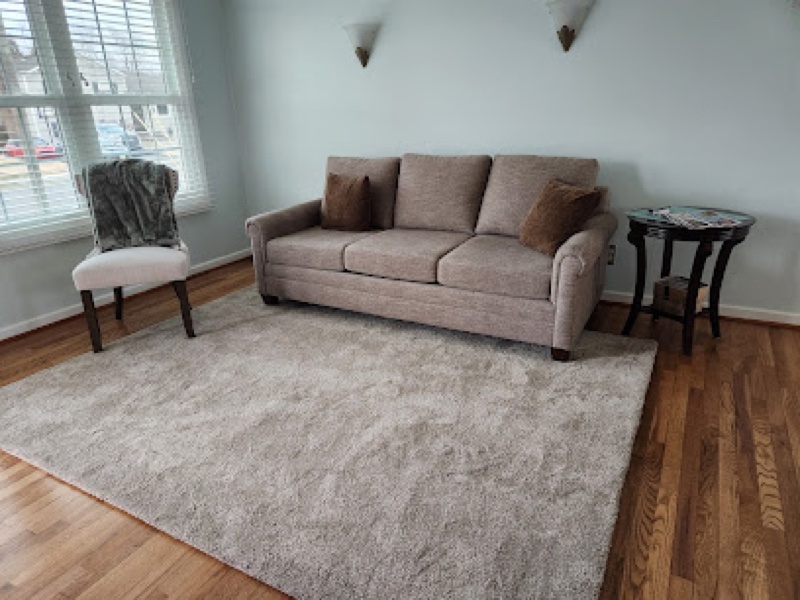
Custom Area Rugs
What it is: Start-to-finish rug fabrication. Bring us your own fabric or
pick from our samples — we cut, bind, and finish.
Shapes we cut: Rectangle, round, oval, octagon, L-shape, and custom
cutouts around columns or fireplaces.
Choose it when: Stock sizes don’t fit your room or the shape is unusual.
Designer favorite.
✅
Non-Slip Rug Tape
What it is: Non-slip backing applied to the underside of your area rug —
not an edge finish, but an add-on most customers want.
Purpose: Keeps the rug in place on hardwood, tile, LVT, or laminate.
Stops the bunching and sliding without a separate pad underneath.
Choose it when: You’ve got a hard floor under the rug and want it to
stay put.
Rush Service
What it is: Expedited turnaround on binding jobs.
Standard turnaround: 3–5 business days. Rush:
next-day or 2-day depending on scope and yarn in stock.
Choose it when: Designer or trade deadline, staging job, or you just need
it fast. Ask when you book and we’ll confirm same-day.