Never Pay Full Price Again!™
Shop At-Home and SAVE!
Wide Binding & Stitch Education
For stair runners, hallway runners, landings, and custom area rugs — the carpet is only half the finished look. The way the binding is stitched changes everything you see at the edge.
There are only five wide-binding fabricators in New Jersey. Two of them work for My Way Carpet — including a fabricator who built rugs for the late Einstein-Moomjy, the legendary New York rug house that closed in 2018.
When you order a custom stair runner, hallway runner, or area rug from us, the bench work is being done by people who spent decades fabricating for some of the most demanding rug rooms in the region. They’re with us now.
Wide binding is a fabric border sewn around the edge of a carpet, runner, or rug. It’s used most often on stair runners, hallway runners, landings, and custom area rugs when you want a more finished, designer look.
Unlike standard narrow binding, wide binding gives the carpet a framed appearance. It can blend in subtly, or create deliberate contrast — for example, a 2.5″ black cotton binding around a light herringbone runner. Widths typically run 1.5″ to 2″ (sometimes called “semi-wide”), 2.5″, or 3″ and up depending on the carpet, the room, and the look you’re after.
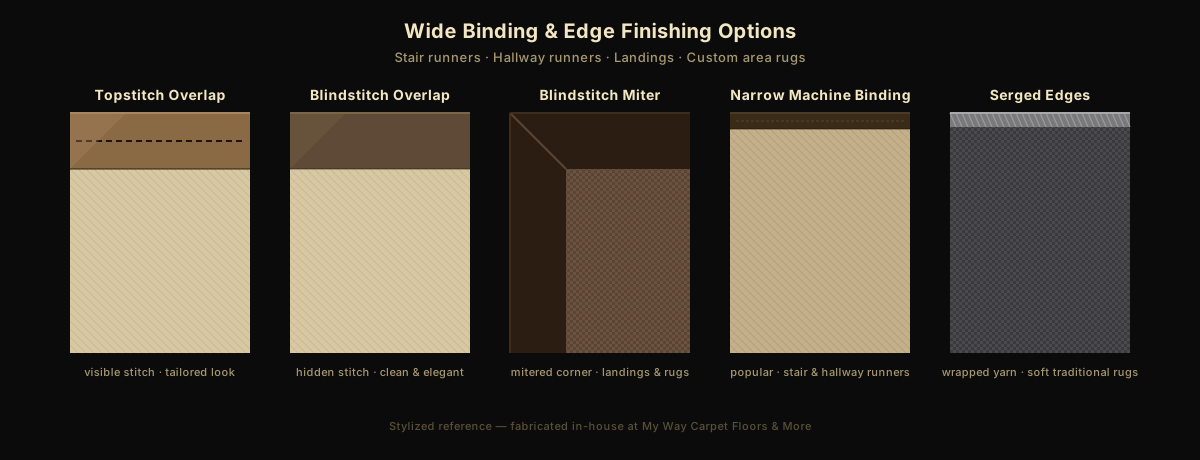
The stitching method matters because it affects how visible the thread is, how the corners are finished, and how clean the edge looks on the finished piece. Five options below — what each one is, what it looks like, and where each one is the right call.
From the bench · craft note
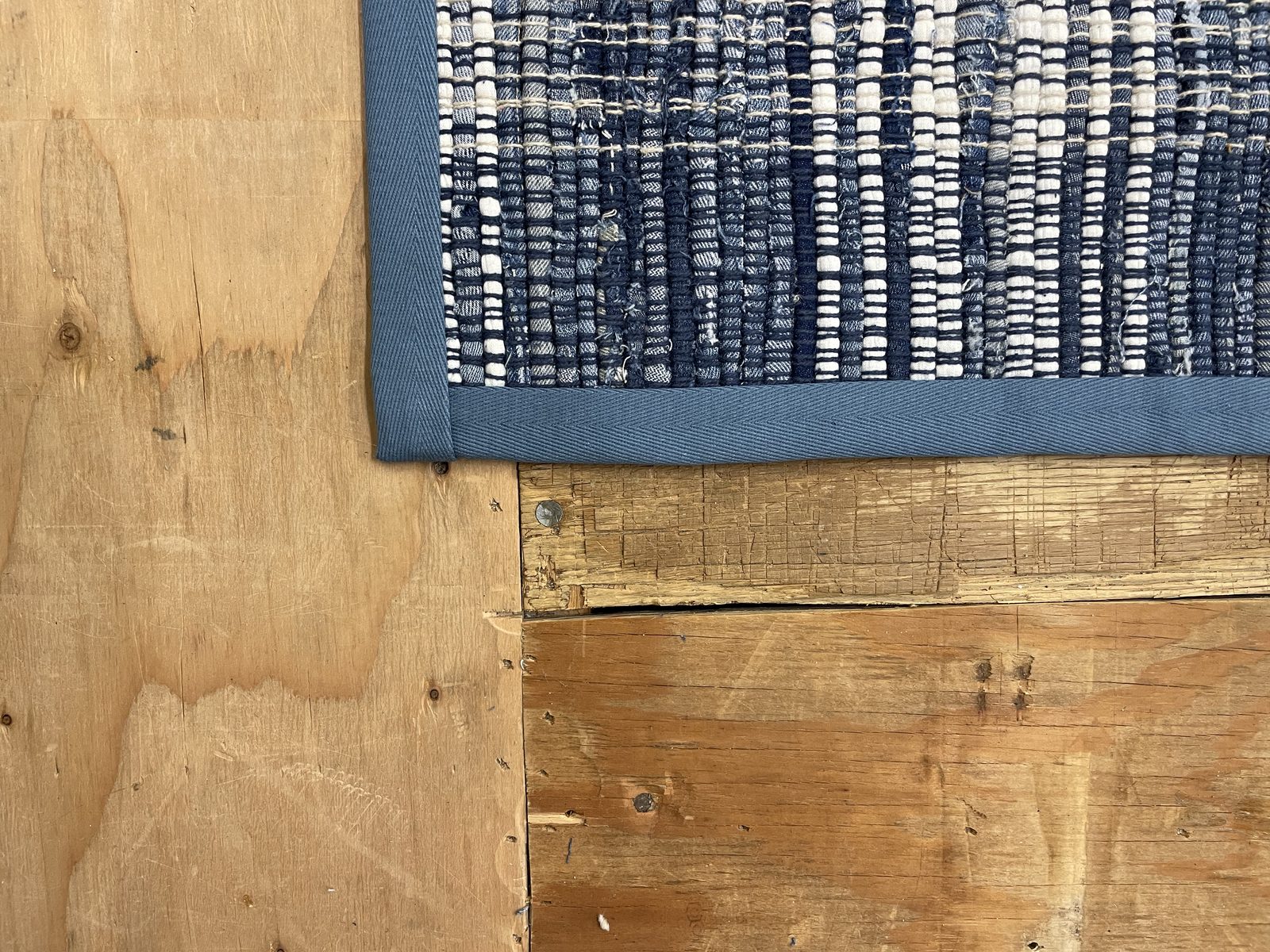
With certain carpets — especially plush or denser-pile constructions — wide binding fabric will ripple or wave along the edge if it’s sewn directly onto the carpet face. The pile pushes up unevenly against the binding, the binding can’t lie flat, and you end up with visible undulations along an edge that’s supposed to be the cleanest part of the project.
The fix is a strip of padding (a shim) placed between the binding and the carpet before the binding gets stitched down. The padding evens out the pile pressure and gives the binding fabric something flat to lie against. It’s a small step — and an easy one to skip — but it’s the difference between binding that looks tailored and binding that looks loose.
Topstitch overlap is one of the most visible stitch styles. The binding wraps over the edge of the carpet and is stitched from the top side, leaving a visible stitch line along the face of the binding.
This gives the runner or rug a more tailored, sewn look. Customers who pick this usually like that the craftsmanship is easy to see. It also adds texture and detail to the border — especially when the thread color contrasts slightly with the binding fabric. Topstitch overlap is clean, strong, and gives the edge a deliberately finished appearance.
Best for: Stair runners, hallway runners, area rugs — projects where a visible stitch is acceptable or preferred as part of the design.
Blindstitch overlap uses the same wrap-over technique, but the stitch is much less noticeable from the face of the runner or rug. The binding still secures the edge cleanly — the stitching just stays out of the way visually.
This is the popular pick when you want wide binding but don’t want an obvious stitch line. The fabric border becomes the focal point, not the thread. It’s often used for higher-end stair runners and custom rugs because the result reads as refined and intentional.
Real example — Watchung, NJ install
This stair runner is Kane Carpet Softly Stated in Barona (color 995) with a 2.5″ wide black cotton binding — finished with a blindstitch overlap. Look at the edge of the black binding: it’s a clean, continuous band with no visible stitch line across the face. That’s the blindstitch doing its job.
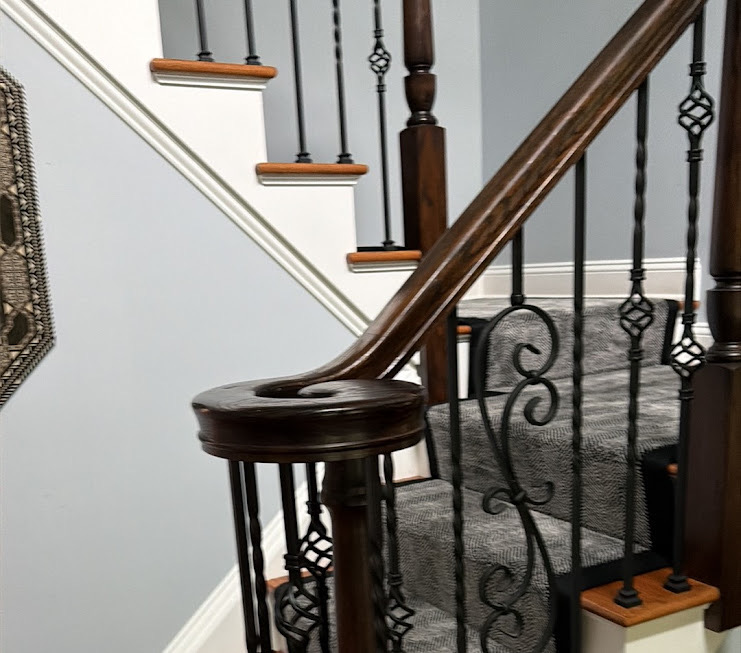
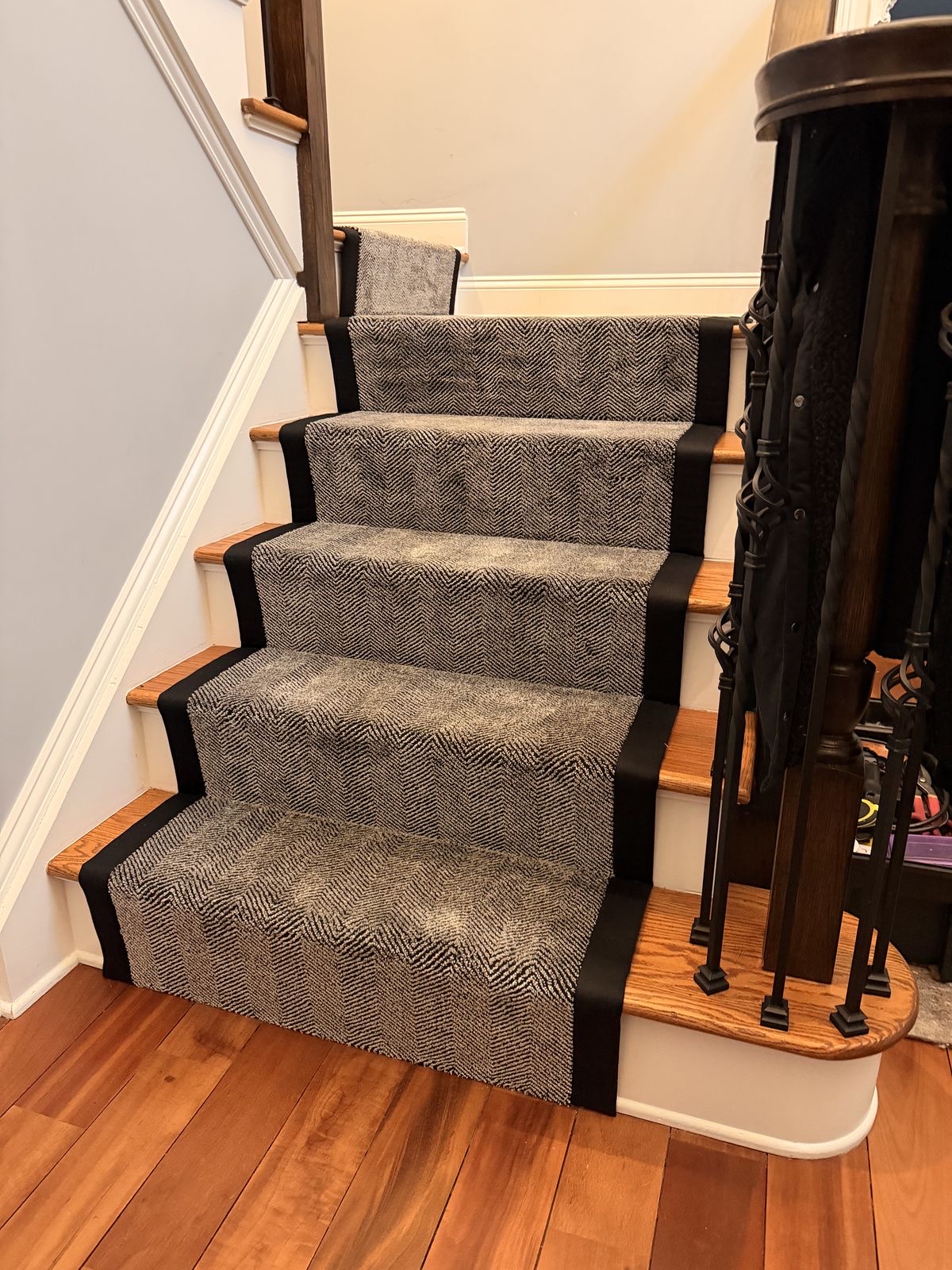
Best for: Customers who want a clean, elegant look with minimal visible stitching — high-end stair runners and showroom-grade custom rugs.
Blindstitch miter is what we reach for when corners need to look clean and properly finished. Instead of folding or overlapping the binding at the corner, the binding is cut and joined on a 45° angle — a mitered corner.
Same general idea as a picture frame: the binding meets neatly at the corner with a single diagonal seam. The blindstitch keeps the stitching itself invisible, so the focus stays on the clean corner geometry and the carpet design.
Mitered corners take more time and more skill at the bench, but they make a major difference in the final appearance — especially on landings and area rugs where the corners get looked at up close.
Real example — Watchung, NJ install
Same Watchung install — this is where the wide cotton binding turns at the landing. The binding is cut on a 45° angle and joined with a stitched mitered corner, then the blindstitch hides the thread so all you see is the clean diagonal seam meeting the next length of binding.
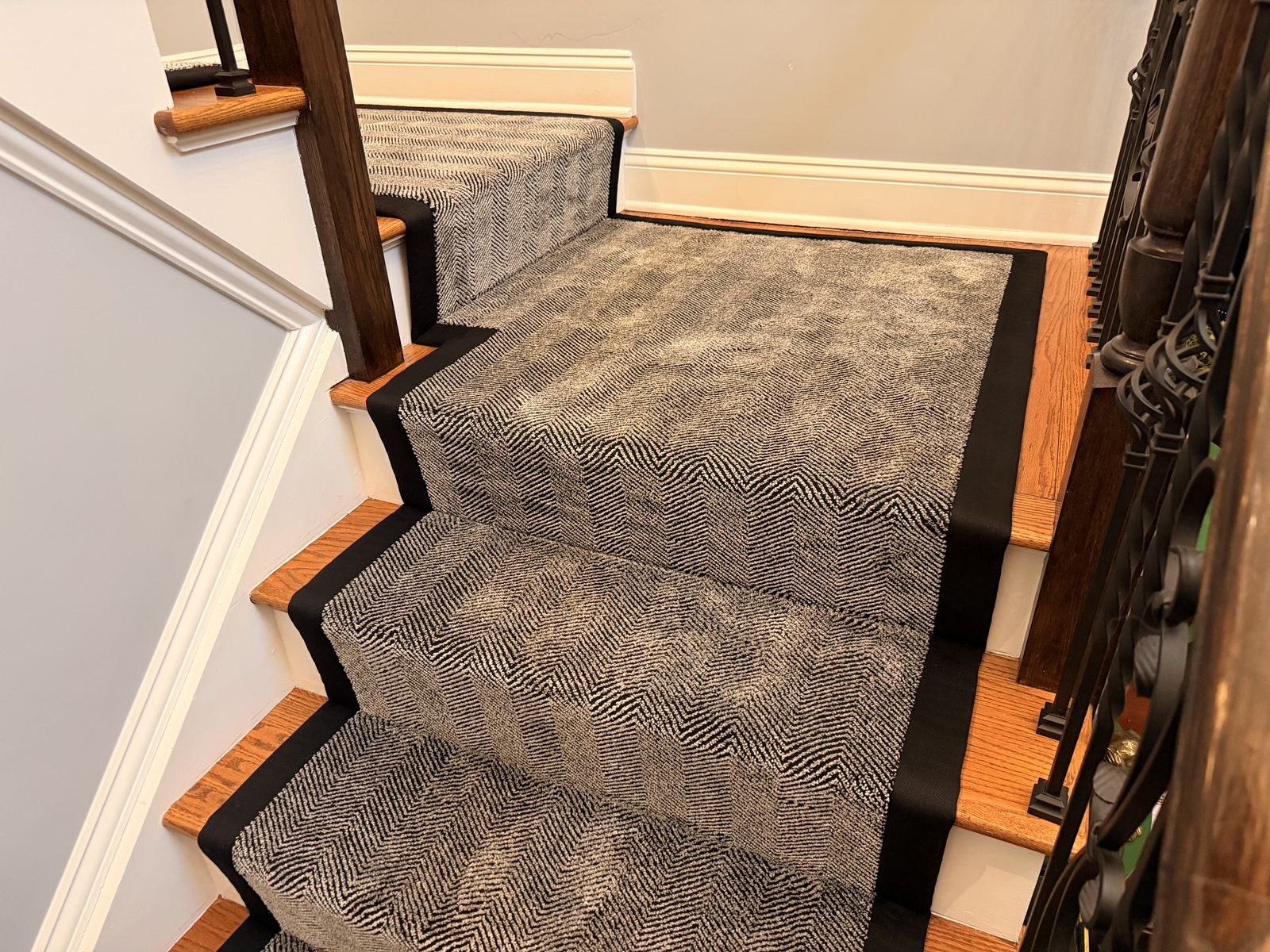
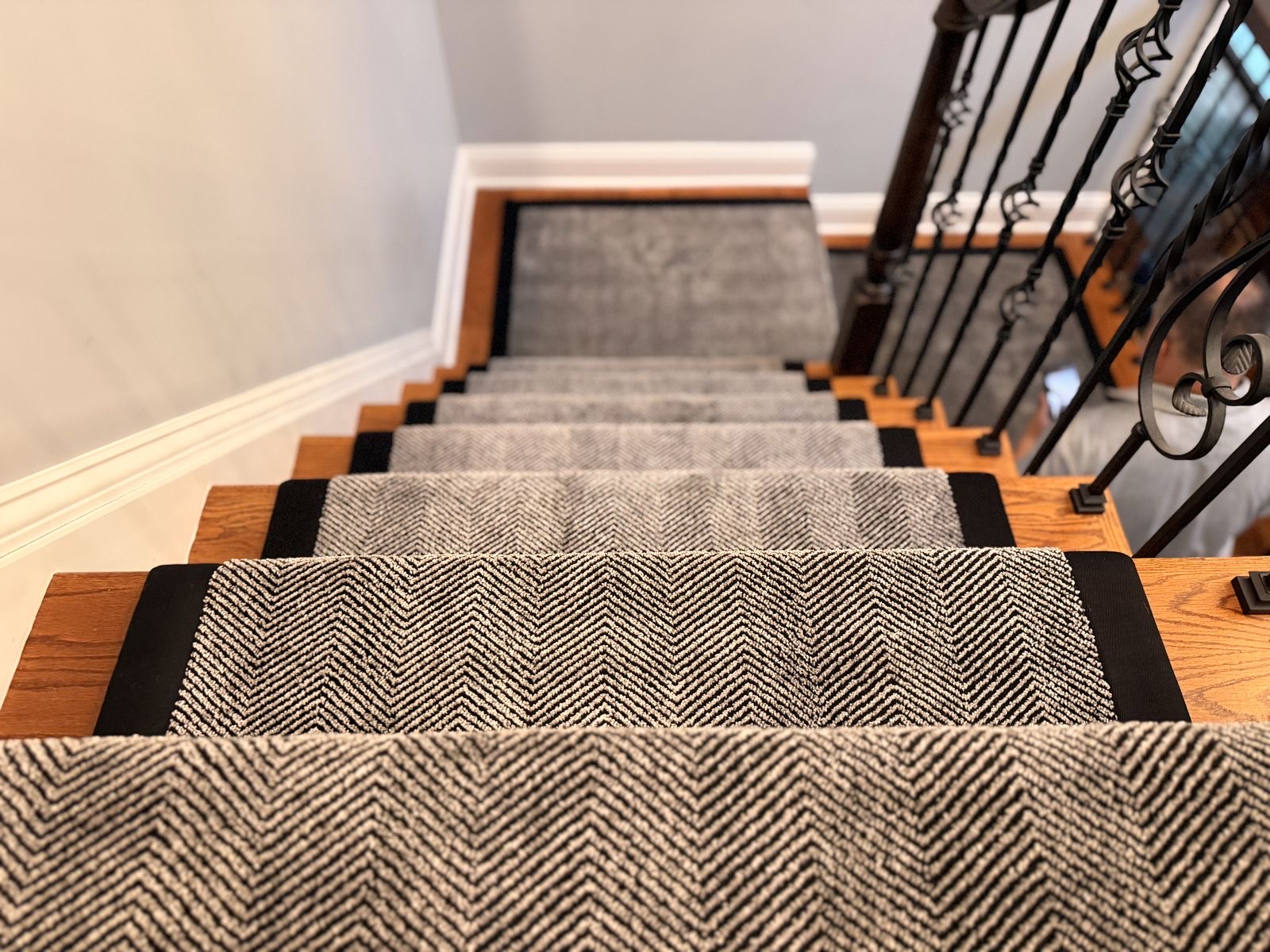
Best for: Landings, custom area rugs, hallway runners with returns, and any project where the corners will be highly visible.
Narrow machine binding is one of the most popular edge finishes for carpet runners — hallway runners, stair runners, and custom area rugs alike. The binding strip is narrower than wide binding (roughly 7/8″), sewn down the cut edge of the carpet on a machine. The result is clean, tight, and tailored.
It’s the default for a reason: it gives a finished, professionally bound edge without the price or visual weight of a wide decorative band. On a stair runner or a long hallway runner, narrow machine binding reads as deliberate and finished — the carpet is the focal point, the binding is the frame doing its job.
It’s also the right call when the carpet itself has strong color or pattern that doesn’t need a wide contrasting border to compete with.
Real example — finished runner from the bench
Two close-ups of narrow machine binding on a finished runner edge — what a tight, properly bound carpet edge looks like up close. The binding tape wraps the cut edge of the carpet and is sewn down by machine in one continuous pass.
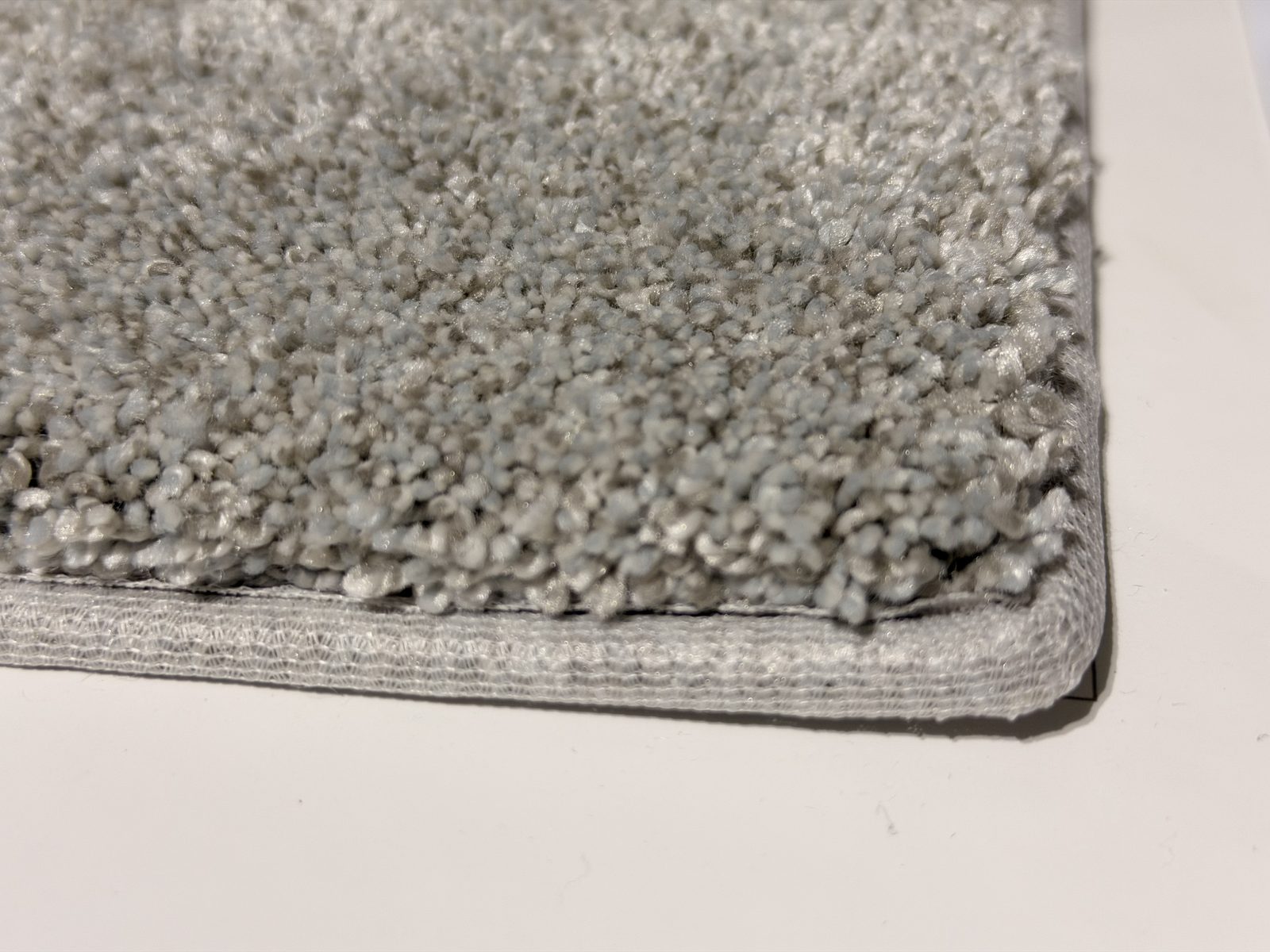
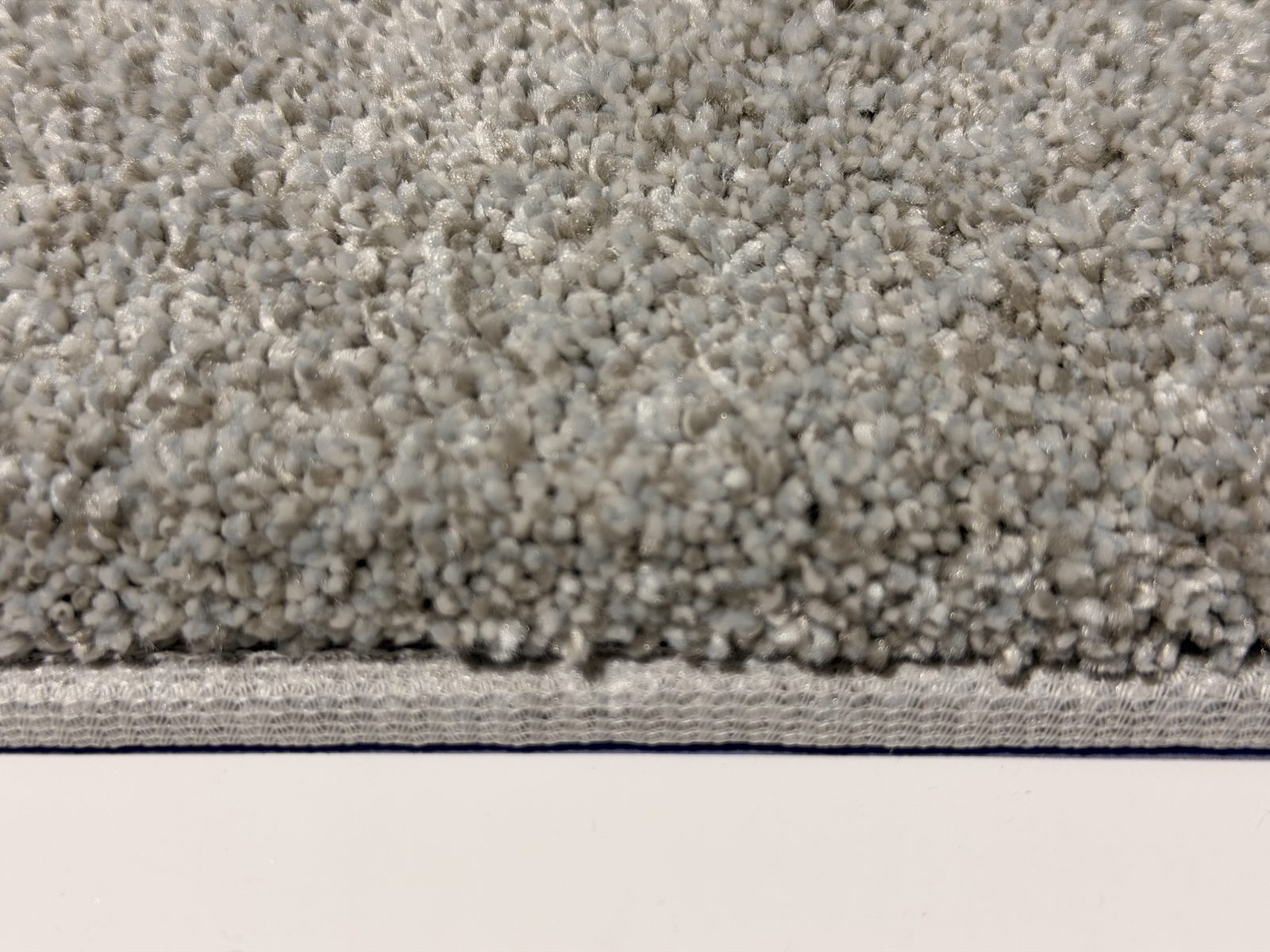
Best for: Stair runners, hallway runners, custom area rugs — whenever you want a clean, durable, professionally bound edge without the wide decorative band.
Serging is a different category from binding. Instead of wrapping fabric around the edge, serging uses yarn (or heavy thread) wrapped tightly around the carpet edge, creating a rounded, stitched edge that blends with the carpet face.
Depending on the yarn color, serging can disappear into the carpet or add a deliberate contrasting edge. It produces a softer, more traditional rug finish — different in feel from wide binding, which reads as a framed border. Serging is a higher-skill option than narrow machine binding because the yarn has to wrap evenly and densely across the entire edge with no gaps.
Real example — serged edges from the bench
Four close-ups of a finished serged edge — the wrapped yarn texture, the rope-like rounded profile, and how the serging turns cleanly at a corner. This is what dense, even serging looks like coming off the bench.
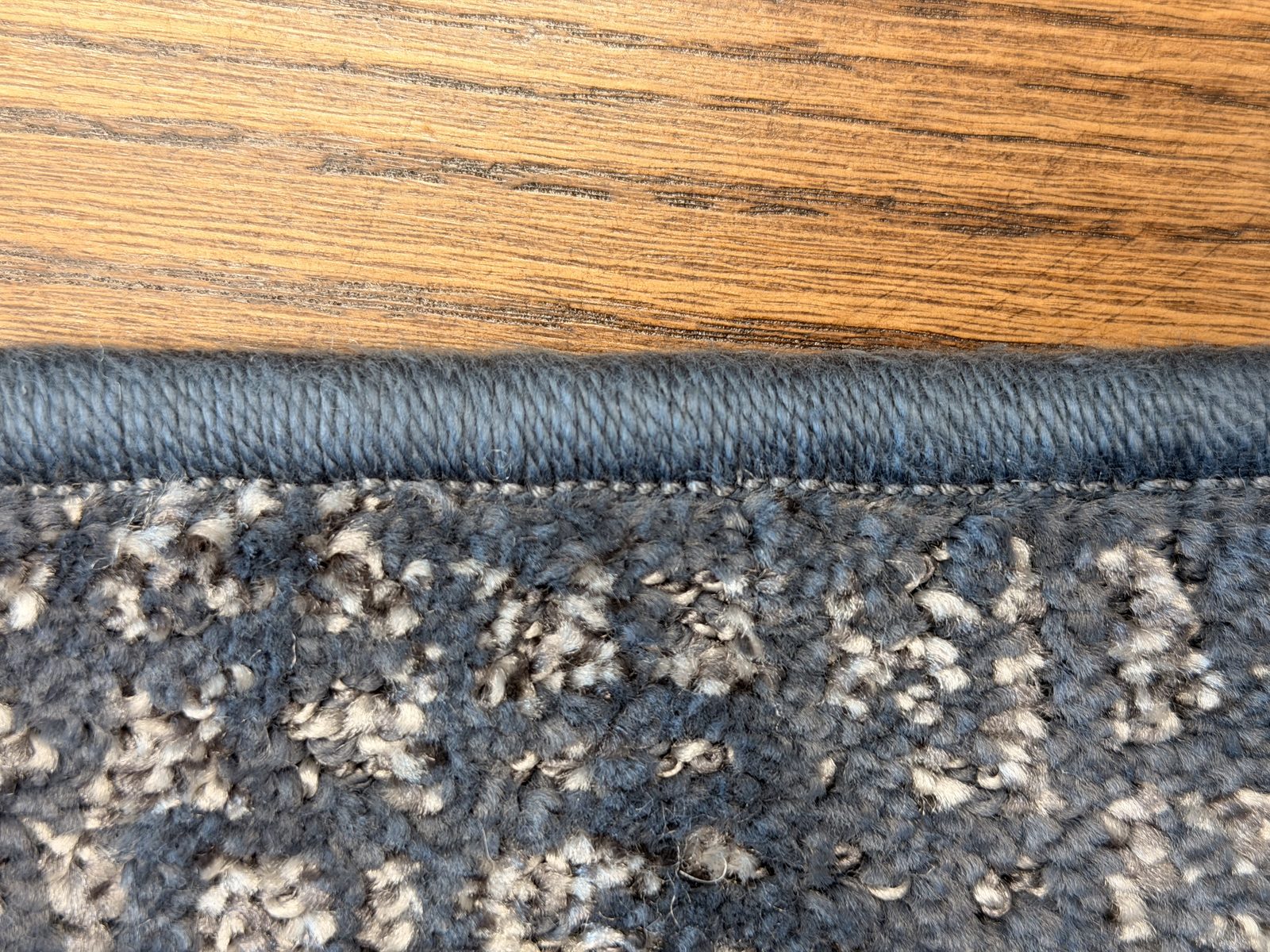
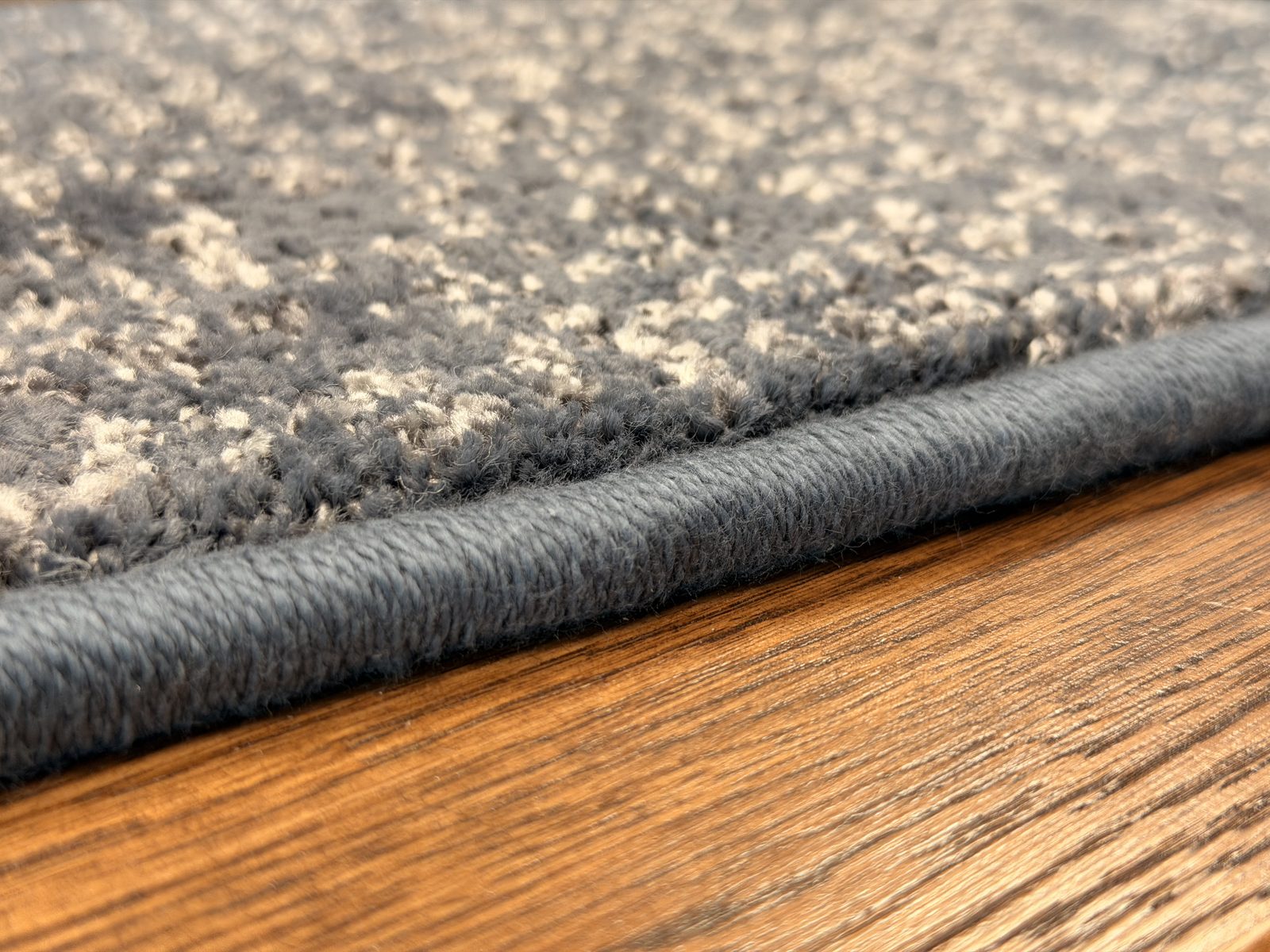
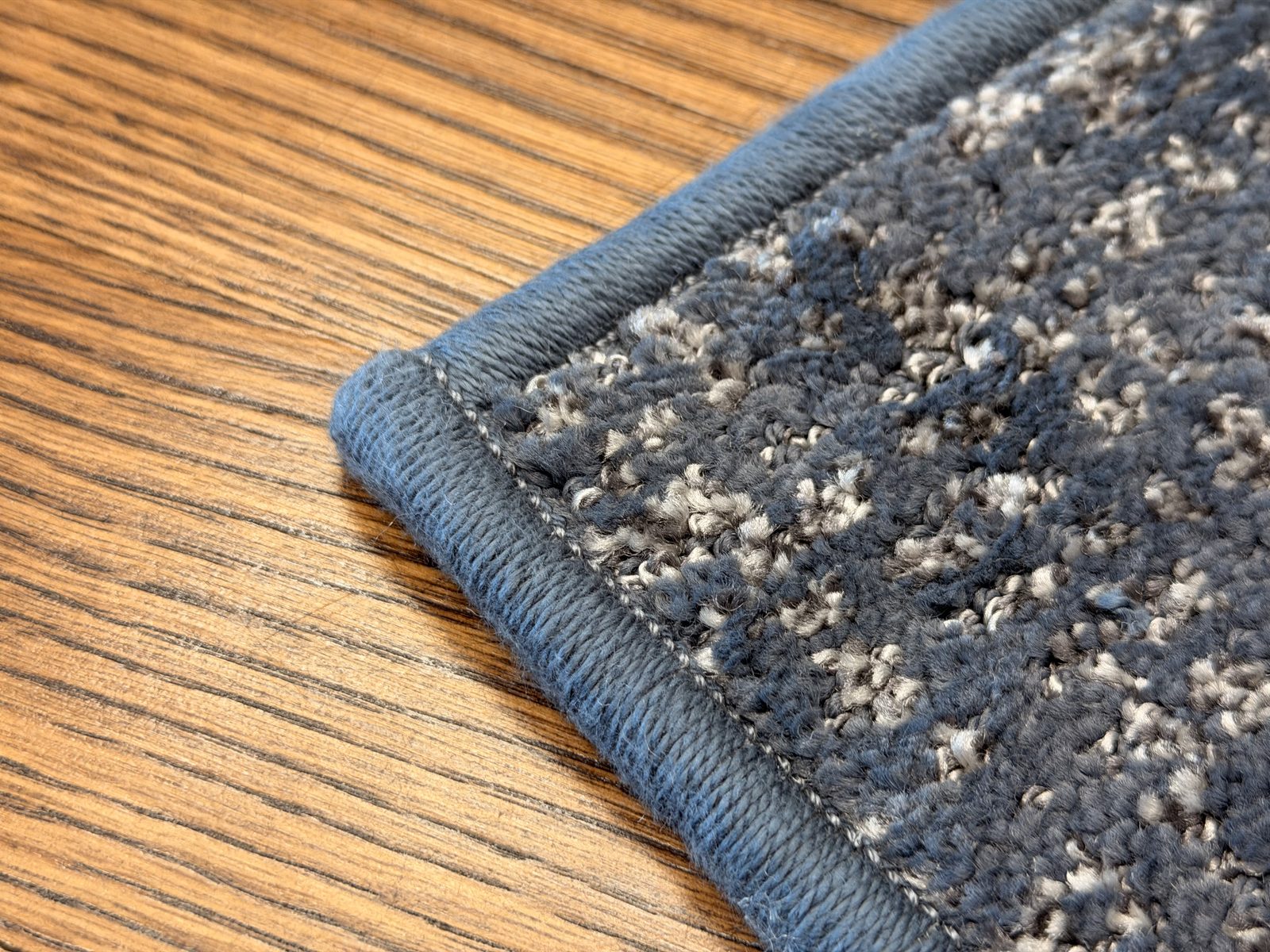
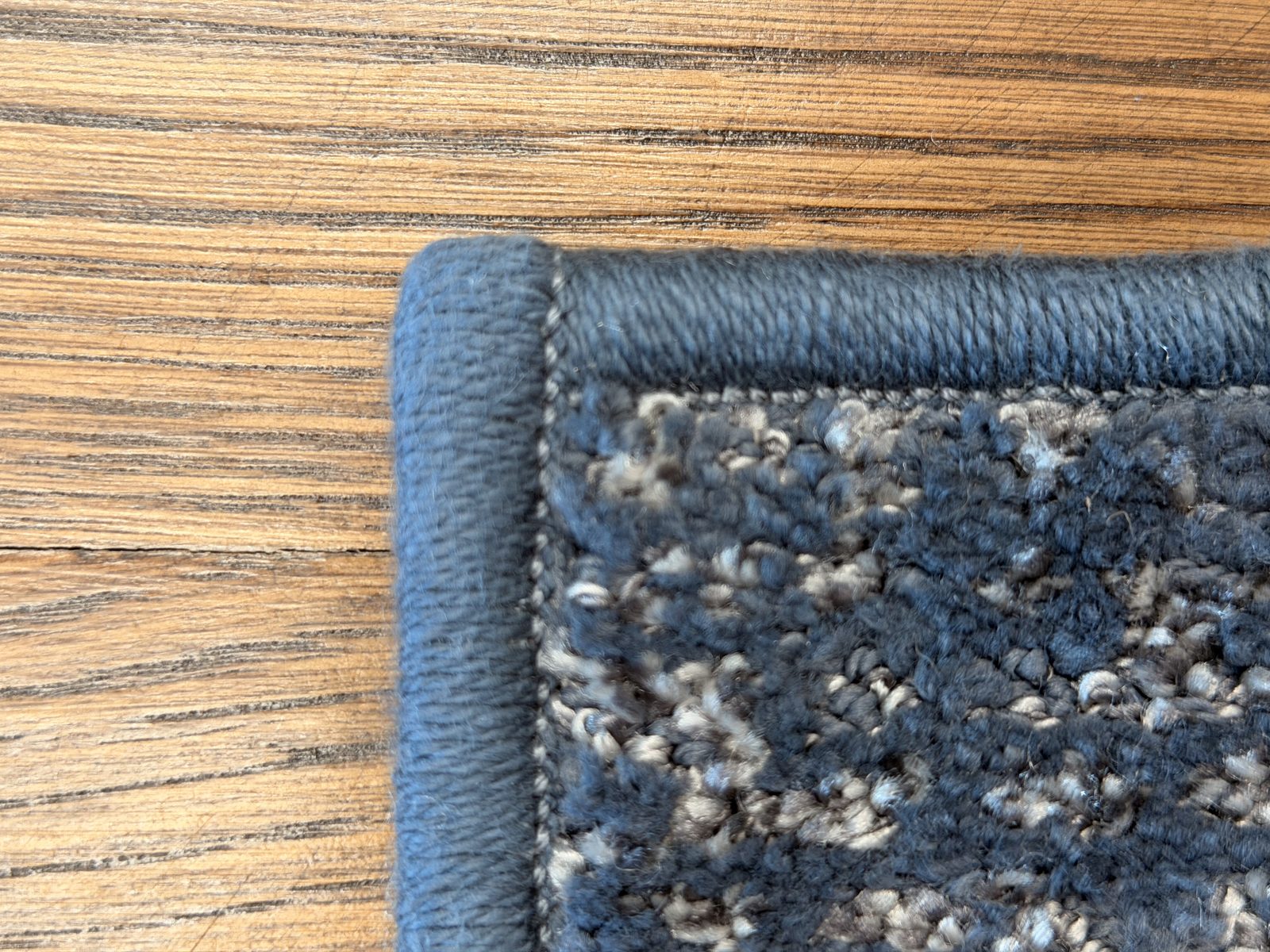
Best for: Area rugs and custom rugs where a softer, traditional edge finish suits the carpet better than a fabric border.
The right choice depends on how visible the edge will be, the look you’re after, and what the piece is.
Not sure? We’ll bring binding samples on the showroom visit and lay them next to the carpet so you can see all five against your actual color and texture.
Wide binding and custom stitching require experience. The carpet has to be cut square, the binding has to be lined up consistently along the edge, and the corners need to be finished with care. On stair runners the details matter even more — a runner is viewed from multiple angles and the edges are exposed at every single tread.
A poorly fabricated runner shows it: uneven binding width, crooked stitch lines, bulky corners, edges that don’t sit flat. A properly fabricated runner looks balanced, smooth, and finished before it ever gets carried up the stairs.
That’s what we hire fabricators for. The bench is where the project is won or lost — not the install.
New Jersey & NYC/Manhattan. Mobile Store to Your Front Door® residential sales, measure, and installation across all 21 NJ counties plus Manhattan.
Ships nationwide. COREtec and other waterproof product drop-ships anywhere in the United States. (Material only — local installation not included outside NJ/NYC.)
Coast to coast. We service large commercial clients (LA Fitness, Nike, IKEA, GAP, Old Navy, etc.) anywhere in the country. Contact us for commercial rollouts.
Phone-first. We’ll qualify the project, bring carpet samples + binding swatches, and quote your stair runner, hallway runner, landing, or custom area rug on the spot.